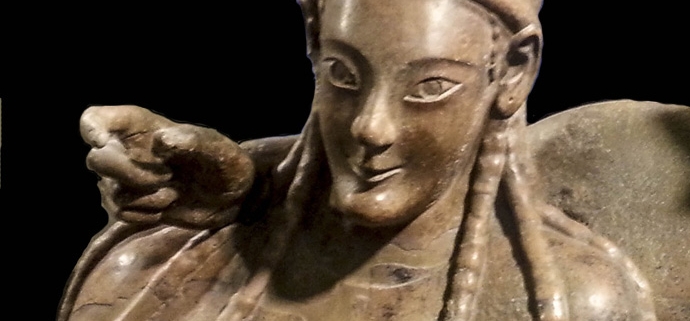
Women played a very important role in Etruscan society. Both the practice of Matronymic (a social norm according to which children took their mother’s name) and the participation of women in banquets, unlike the Greek symposia, show how important the woman in Etruscan society was. It also appears that simply having an Etruscan mother was […]
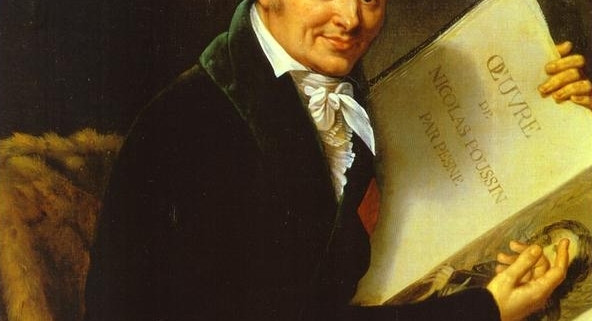
On June 18, 1815, the Battle of Waterloo signaled Napoleon’s final defeat and the end of the Napoleonic era. After his fall, the Congress of Vienna (1815) re-established the old pre-Napoleonic kingdoms (Restoration) in Europe. However the “new king” of France, Louis XVIII, had stated in Parliament that works of art belonged to France […]
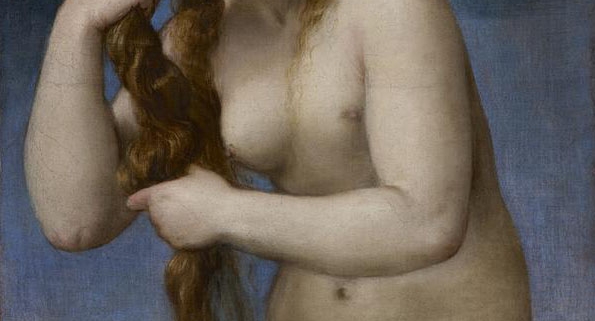
In the ancient world, the ideal of female beauty derived from a Greek canon, from marble sculpted deities by artists who modeled the best features of various women to create a virtual, ideal and absolute beauty. This ideal beauty, combined with the hairstyles and clothing of the classical tradition, has always been well […]
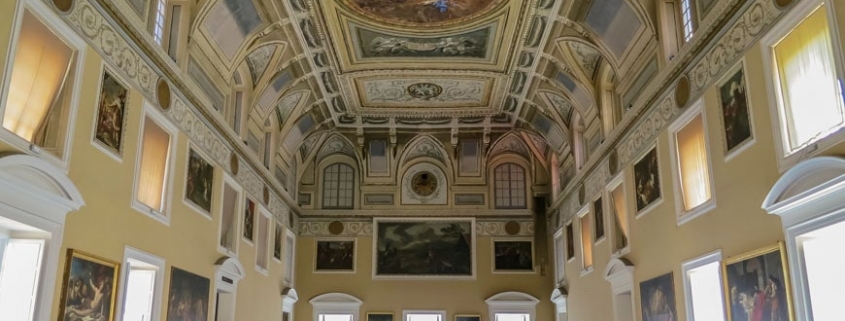
In 1731 King Charles of Bourbon inherited the famous “Farnese collection” from his mother, Elisabetta Farnese. When the enlightened sovereign ascended the throne of Naples in 1734, he took these splendid works of art with him in dowry to the Parthenopean city. Charles furthermore ordered the excavations of Herculaneum (1738) and Pompeii (1748), which led […]
During the Bronze Age, particularly from the 16th century [from the Middle Bronze Age 1] to the 11th century BC [at the end of the Bronze Age], intense contacts between indigenous groups in Southern Italy and Sicily and the Mycenaeans are confirmed with certainty: this is confirmed by the discovery in modern times of […]